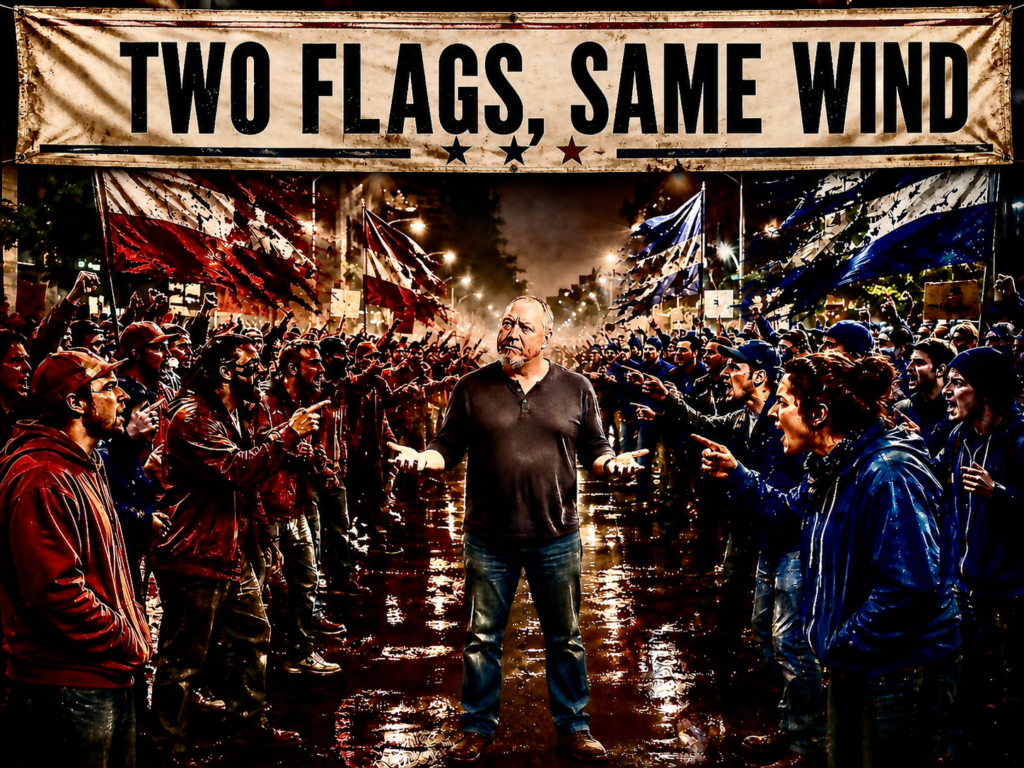
Two men. One washed beggars’ feet. The other gold-plates toilets.
(Listen while reading)
Jesus walked into leper colonies. Trump won’t shake hands without sanitizer. Christ broke bread with prostitutes and tax collectors. Trump dines with billionaires at Mar-a-Lago. Bills the Secret Service for protecting him.
The Nazarene owned one robe. Trump owns suits cut to hide what they can’t. Jesus spoke in parables. Trump speaks in circles back to himself.
Christ faced his accusers in silence. Trump fires lawsuits at 3 a.m. The Son of Man turned the other cheek. The son of Fred Trump turns on anyone who doesn’t clap.
One man carried his cross up a hill. The other carries grudges.
Millions call them both Lord. Evangelicals who memorized the Beatitudes shout his name at rallies. They read “Blessed are the meek.” They cheer a man who mocks the disabled on camera.
Jesus cleared the temple of money changers. Trump fills his with them. Names them cabinet secretaries.
Pardons them when they get caught.
A modern psalm of indictment, A Sickness in His Soul draws a stark, unflinching line between the gospel of Christ and the gospel of Trump.
I walked among the poor and low
Two thousand years and more ago
Built no throne, but truth was told
Betrayed with thirty pieces of gold
Now I watch from skies above
They preach My name, forget My love
They use the cross to justify lies
Sickness in his soul, diseased and cold
Carrying weight no mind can hold
He kills what’s kind, just, and right
And keeps the truth out of the light
Wear My name like armor bright
Preach the law but shun the light
Turn the stranger from the gate
Call it faith, but it’s just hate
There’s a sickness in his soul
Steals the pulpit, takes control
Wraps himself in flags and fire
Builds his gospel on dark desires
Twists the truth and wears My name
Then turns the cross into a flame
Crowned a king with crooked grin
Claimed he spoke the truth within
But I don’t roar, or strike, or boast
I walk with those broken, low, and lost
There’s a sickness in his soul
It took root so long ago
He cannot choose what’s just and right
His skin splits at the smallest slight
Still hear children singing low
Down where broken halos glow
Choirs bow to wealth and fame
Sell My words and sign My name
I turned the tables once before
And I will turn them once again
When the temple fattens off the poor
Believe Me — that’s sin
Gene Scott grew up on a tenant farm in Sheffield, Illinois, where strip mines swallowed the prairie and Euclid trucks hauled coal past the kitchen window. His father welded for International Harvester winters and pulled hogs from collapsed mine shafts. His mother drove a hundred miles round-trip to Bradley University three days a week, graduated with honors, and never let them miss a meal. Scott earned degrees from Illinois and Missouri, married Lana Ferguson on her family’s front porch in Hancock County—the oldest residence in the county, where her Confederate ancestor is buried at the edge of the woods—and raised a son in the Appalachian foothills. His writing draws on Midwestern magical realism, generational memory, and the stories told around oak kitchen tables where stoker men and snake women once drank coffee.
