
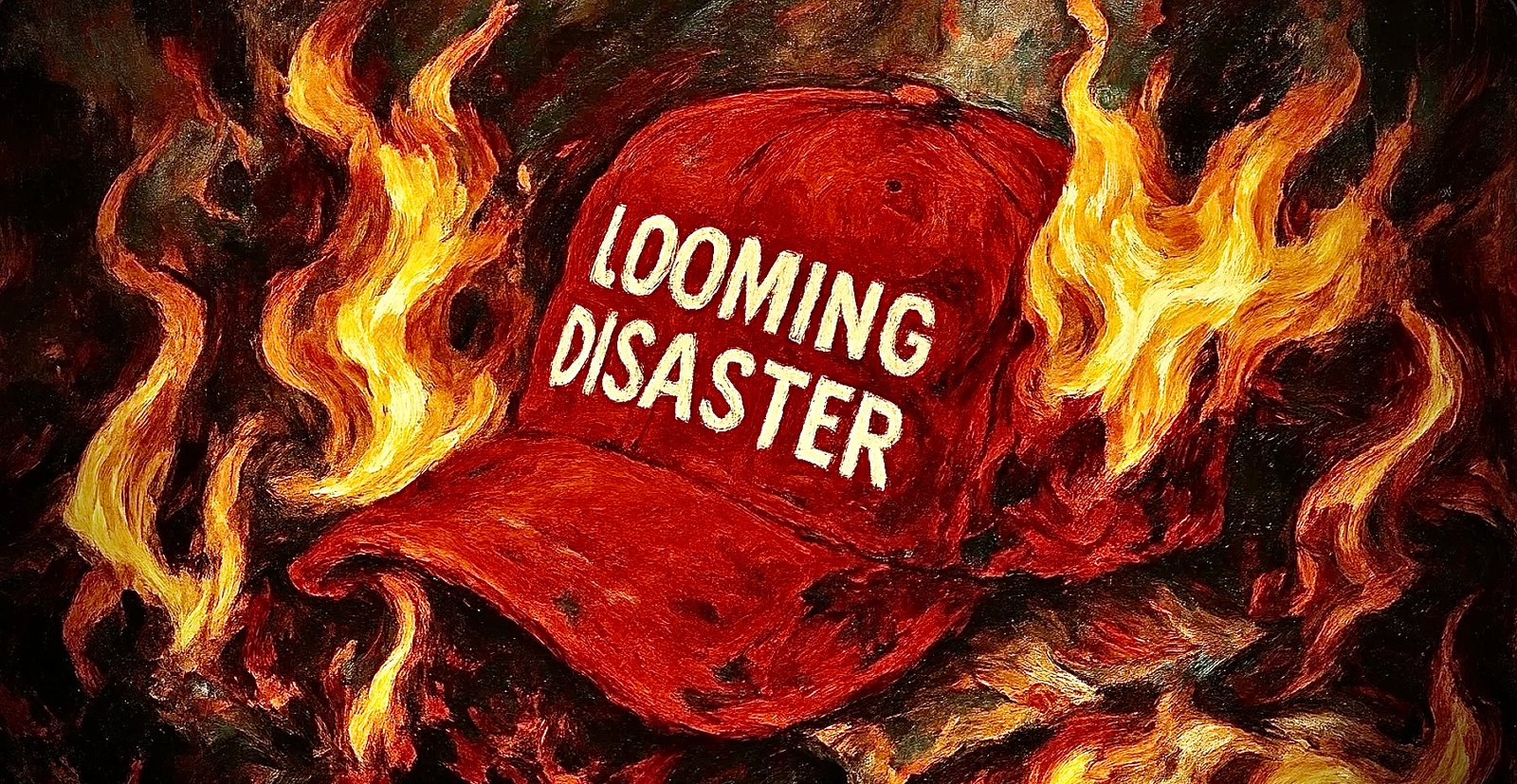
How the Big Beautiful Bill Gutted Rural America
By Michael "Gene" Scott
2027: Sarah Can’t Find a Doctor
Tuesday morning, rural Kansas. Sarah Henderson is making the drive. Again. Two and a half hours each way to Kansas City—the closest doctor who takes her insurance. Well, took her insurance. After Medicaid work requirements kicked in, she lost coverage for three months in a paperwork snafu. By the time she got it back, her diabetes had spiraled.
Sarah’s story isn’t unique. It’s the new normal.
The clinic in Fredonia where she used to go? Closed in 2026. The regional hospital thirty minutes away? Cut cardiology and hospice. The nursing home where her mother lived? Shuttered, forcing a desperate search an hour away. In Gila County, Arizona, where 40% of residents rely on Medicaid, the local hospital runs on skeleton staff after laying off a quarter of its workers.
These communities didn’t ask for this. They voted for the administration that delivered it. Two-thirds of the 300 counties with the biggest Medicaid growth over fifteen years went for Trump in 2024. Kansas, Oklahoma, Alabama—states now facing the most rural hospital closures—all went red by wide margins.
A Slow Drowning
None of this is accident. These are policy choices, small decisions that seemed technocratic on paper but add up to catastrophe. Each provision came wrapped in a ribbon. Reform, they called it. The scissors went deeper than they said.
Cut #1: The Big Beautiful Bill (July 2025)
The One Big Beautiful Bill slashed over $1 trillion from Medicaid and the ACA. CBO estimated 17 million would lose coverage by 2034. Rural areas: $155 billion in cuts over ten years.
Republican senators called it “the largest investment in rural health care in decades,” pointing to a $50 billion “Rural Health Transformation Fund.” They didn’t mention the administration capped hospital funding at 15%. A $7.5 billion band-aid for a $990 billion wound.
The bill imposed work requirements, added paperwork, restricted state funding options. Each change sounded reasonable alone. Together, catastrophe.
Cut #2: Provider Taxes Eliminated
States have long used provider taxes—fees on hospitals and health plans—to fund Medicaid, with federal matching amplifying the investment. The new law capped and eliminated these taxes, cutting $375 billion over a decade.
Senator Crapo called it closing a “loophole.” It closed hospitals. These facilities run on margins so thin they barely exist, serving populations where 47% of births are Medicaid-covered and 65% of nursing home residents depend on the program. In half of states, rural hospitals now face 20% Medicaid cuts. That doesn’t mean less profit. It means closed doors.
By mid-2025, before most provisions took effect, 338 rural hospitals were at immediate closure risk. Ninety-two had shut down the previous decade. The cuts turned crisis into collapse.
Meanwhile, Sarah’s insulin supply was halved last week. The pharmacy couldn’t restock. She’s rationing, cutting doses, gambling with her body.
Cut #3: ACA Subsidies Expired
Enhanced ACA premium tax credits expired at the end of 2025. The bill did nothing to extend them.
Premiums doubled for 20 million Americans. North Carolina: up 29% in 2026. Hundreds of thousands dropped coverage. Four million nationwide became uninsured from this one change.
The CBO was blunt: this was a choice. The subsidies could have been renewed. They were sacrificed to fund tax cuts for the wealthy.
Cut #4: Immigrant Eligibility Restricted
Lawfully present immigrants—refugees, asylum seekers, DACA recipients—lost access to Medicaid, CHIP, and ACA subsidies. An estimated 1.4 million lost coverage. People here legally, working, paying taxes, raising families.
Staggered deadlines through 2027. Each brought waves of uninsured patients into emergency rooms—the most expensive care—driving up costs for everyone.
Cut #5: CDC and WHO Gutted
Day one, Trump withdrew from the WHO. The CDC saw 2,000 jobs cut in 2025, with proposals to slash its budget by half in 2026.
State health directors now cobble together their own surveillance. Massachusetts relies on AI scraping news for outbreak signals. Illinois patches together local efforts. “It all feels very haphazard,” says Dr. Vidhya Prakash of Southern Illinois.
Measles climbing. Whooping cough outbreaks more frequent. Bird flu looming. The infrastructure to catch diseases early—gone.
Cut #6: HHS Workforce Slashed
HHS cut 20,000 jobs, from 82,000 to 62,000. Press releases promised savings of “$1.8 billion a year” and a more “responsive” agency.
Fewer people means longer waits, fewer inspections, slower responses. The office enforcing surprise billing protections? Cut 15%. Childhood lead surveillance? Defunct. Nursing home staffing standards? Blocked.
History Repeating
We’ve watched this before.
Early 1980s: Reagan cut Medicaid by 18%. HHS budget slashed 25%. Maternal and child health funding dropped 18%.
The promises then sound familiar. Jobs with insurance. States picking up the slack. No real harm. Reagan officials called cuts “streamlining.”
They were wrong.
Between 1981 and 1982, infant mortality rose in poor areas of 20 states, reversing years of progress. More women got no prenatal care. Childhood diseases increased. Unintended pregnancies jumped 8% from 1982 to 1987. By 1985, 15% lacked insurance. Life expectancy for Black Americans fell.
“For 35 years, the U.S. has fallen further behind in health,” says Dr. Sandro Galea, dean of Boston University’s School of Public Health. “This coincides with Reagan’s disinvestment in public good. We’re continuing along these lines—that’s what worries me.”
The 1980s brought broader deregulation. For-profit hospitals spread. Investor-owned corporations entered healthcare, focused on revenue over service. Spending diverged from other nations and never came back.
Same experiment, larger scale.
Geographic Betrayal
The cruelty has a geography. The places hurt worst supported these policies.
UNC researchers mapped hospitals at risk:
- Kansas: Multiple closures imminent. Trump +15.
- Oklahoma: Highest at-risk count. Trump +33.
- Alabama: Numerous closures. Trump +25.
- Pennsylvania: 25 hospitals could close. Trump +2, with bigger rural margins.
- Gila County, Arizona: 40% on Medicaid, hospital struggling. Trump won.
The Rural Health Association: Medicaid cuts exceed 20% in half of states. The Hospital Association: 1.8 million rural residents lose coverage by 2034, $50.4 billion cut from rural hospital spending.
Sixty million Americans live rural. Older, sicker, poorer than urban. Higher chronic disease. Fewer options. Medicaid covers 16 million of them. Call it welfare. They call it survival.
When a rural hospital closes, it’s not just healthcare. Often the largest employer, highest wages. Anchor of the tax base. Closure triggers decline—property values drop, schools lose funding, businesses leave.
Voices
Jennifer Mensik Kennedy, American Nurses Association: “I get that they want to cut fraud, but taking a swipe across the top won’t solve it. The cuts could shutter hospitals and health centers in rural areas.”
William Dow, UC Berkeley: “Many cuts won’t take effect for years, so there’s time for reversals. But more uninsured means more unpaid bills, higher prices, and based on experience, safety net clinics will close.”
Benjamin Anderson, CEO, Hutchinson Regional Healthcare, Kansas: The hospital is “evaluating how to keep offering all services—hospice, home care, mental health, cardiology.”
Senator Ron Wyden: “Thanks to Trump and Republicans, hospitals will close, providers will lose jobs, patients will face skyrocketing costs.”
Dr. Nahid Bhadelia, Boston University: Health departments “facing difficulties across outbreak preparedness, detection, reporting, and response.”
Already Happening
December 2025. The damage is showing.
Closures and layoffs: Blue Mountain Hospital, Oregon—nine staff cut. Seattle Children’s—154 workers, 350+ positions. Sloan Kettering, New York—400+ staff. Augusta Medical, Virginia—three rural clinics closed, citing the Big Beautiful Bill. Hundreds more announcing cuts.
Premiums: Rhode Island, Maine approved massive increases. North Carolina up 29%. Premiums doubled in many markets. Four million dropped coverage.
Hardest hit: 30,800 jobs lost in North Carolina. $5.2 billion in state economic output gone. 60% of seniors losing Medicaid are women. Children losing pediatric care, mental health, maternity services.
2027
Sarah is still in Kansas. The drive is only part of it.
Her daughter’s school nurse—cut. The dialysis center her neighbor used—reduced hours. Veterans’ mental health services—stretched to nothing. The treatment program that helped her brother—closed.
Each cut seems small. Streamlining. Waste reduction. Loophole closure.
But lives aren’t spreadsheets. A nursing home closure means an elderly parent two hours away, visits impossible. A maternity ward shutdown means a 90-minute drive in labor. A mental health cut means a veteran without care.
Grinding, relentless.
CBO projects 10–17 million losing insurance by 2034. Medicaid expansion reduced mortality. ACA coverage prevented thousands of deaths annually.
Reverse those gains, deaths return. Diabetes complications that regular care would manage. Cancers caught too late. Heart attacks in people who couldn’t afford medication. Infections that spiral because people delay.
Bitter Irony
RFK Jr. promised to “Make America Healthy Again.” Eliminating toxins. Studying cancer. Addressing chronic disease. Trump declared he’d “get toxins out of our environment.”
They promised to root out what’s poisoning Americans, then fired the scientists tracking it. Declared war on chronic disease, then defunded the programs managing it.
Congress repealed rules on dioxins and mercury. The EPA launched what critics call “the biggest deregulatory action in U.S. history.” Environmental justice funding slashed. Workplace safety eroding.
You don’t make America healthy by making healthcare inaccessible.
The slogan was window dressing. The policy was demolition.
What’s Next
Policies locked in. Some active now; others phase in through 2027. Damage accelerates.
States overwhelmed. Pennsylvania faces $29 billion over the decade. States can’t backfill—constitutionally required to balance budgets. Federal funds vanish, services cut.
Without reversals, CBO projects 10–17 million more uninsured by 2034. Hospital closures accelerate. Maternal mortality, infant mortality, preventable disease rates climb. Life expectancy stalls or reverses, especially for the poor and rural.
We’ve watched this. Reagan cuts were partially reversed, but not before a decade of harm.
Sarah makes the drive. Five hours round trip, twice a month. Snacks packed, tank filled, hoping her car holds.
She didn’t choose this. Someone else took the wheel.
Sources: CBO, Kaiser Family Foundation, American Hospital Association, National Rural Health Association, UC Berkeley, Boston University, CMS, AMA, UNC Health Services Research, NBC News, CNN, NPR, CBS News, The Guardian.
