They killed Jamal Khashoggi for his voice. This song is about our silence.
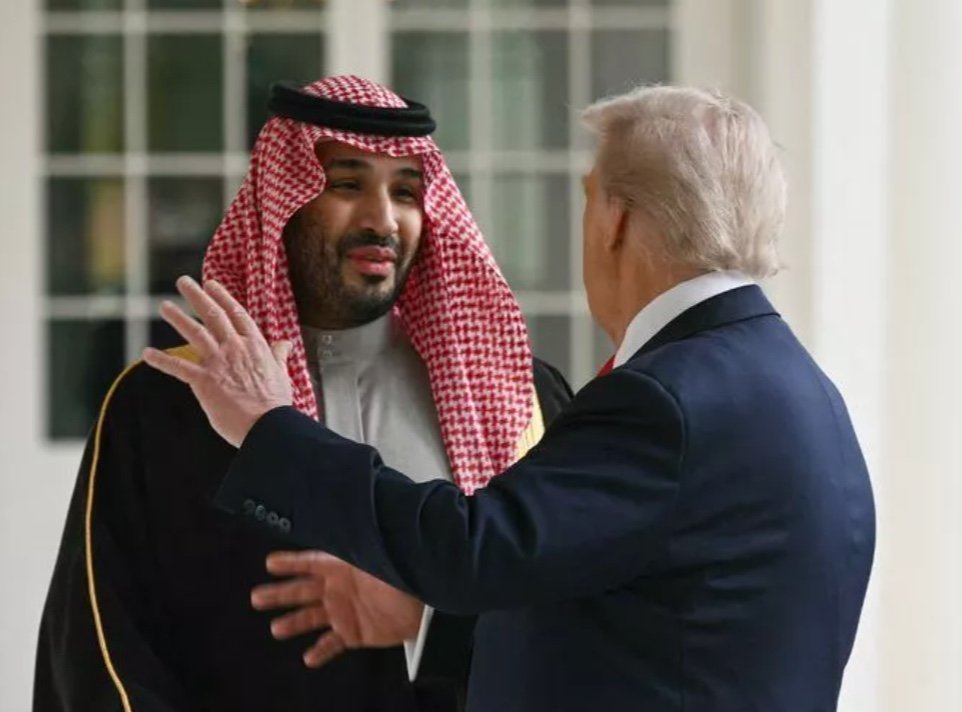
Two days ago, in the Oval Office, a reporter asked President Trump about the murder of Jamal Khashoggi.
The crown prince accused of ordering the killing sat beside him.
Trump’s answer: “Whether you liked him or didn’t like him, things happen.”
That might end up to be an appropriate gravestone etching for the man who’s intentionally thrown a cold wet blanket over America’s freedom, dignity, and economic security.
For his own benefit.
“Things Happen” is a protest song that refuses to let you be the protester. It points at the men who ordered the killing, but it also points at you in your car, hearing the news, knowing what it is, checking the time.
The refrain isn’t just what they say.
It’s what we let them say.
Things Happen
Lyrics by Gene Scott
[Verse 1]
He walked in with a name and a date
They knew what he wanted, they sealed his fate
Fifteen men in a soundproof room
Bone saw singing a quiet tune
Asked the man with the flag and the grin:
“That’s too bad, but we all cash in.”
“Things happen,” he said, turned his back—
Like a body’s just numbers to balance the stack
They hosed the floor, they burned the thread
A signature worth more than blood he bled
[Chorus]
Things happen—
Things happen—
Shrug and turn away from the stain
Things happen—
Things happen—
But the ground remembers the name
[Verse 2]
Strongmen land where the gold gets weighed
Trading silence for a motorcade
Shake the hand that gave the command
Smile for the press with a new game plan
“Everybody’s got a past, my friend”
“Things happen,” he laughs, and the wire gets sent
Consulate’s clean, and the cameras dim
But the kingdom hums with a holy hymn
Steel on the table, smoke in the air
A name erased like it wasn’t there
[Chorus]
Things happen—
Things happen—
Shake the hand and cash the pay
Things happen—
Things happen—
But the ground won’t look away
[Bridge]
How many times can we say “Never again”
Before it means nothing at all?
Scroll past the blood between coffee and keys
We learned how to bury the call
You know what it is—but you’re late for work
You see what it is—but your lane just lurks
Knowing won’t stop you, the world still spins—
The quiet collects on our sins
[Final Chorus / Outro]
“Things happen,” with a smile and shrug
A man had a name—now he’s under the rug
Shake on the deal, pour out the oil—
But it won’t clean the murder from soil
Things happen—
Things happen—
But the ground keeps every word
Things happen—
Things happen—
And the silence will be heard
The Sound
The song opens spare—acoustic guitar, a low drone, not much else.
Seventy-two beats per minute. A resting heart rate. A funeral pace.
The vocal is low and smoky, a woman’s voice that doesn’t reach for you. It states. It testifies. There’s no crescendo, no moment where the band kicks in and the rage gets its release.
The song refuses to give you the emotional payoff that would let you feel you’ve done something by listening.
It stays level.
It stays close.
It denies you catharsis.
That’s dark Americana—Gillian Welch’s austerity, the spare menace of late Johnny Cash. But where those songs often grant moral clarity through sorrow, this one withholds even that.
The ache isn’t for the dead man alone.
It’s for what we’ve let ourselves become.
The Room Without Windows
Jamal Khashoggi walked into the Saudi consulate in Istanbul on October 2, 2018, to get paperwork for his upcoming marriage. His fiancée waited outside.
He never came back out.
Turkish intelligence had bugged the building.
Audio recordings captured what happened:
fifteen Saudi operatives arriving earlier that day on private jets;
an ambush;
a strangling;
a body dismembered.
Forensics doctor Salah Tubaigy told the team beforehand:
“I normally put on my earphones and listen to music when I cut cadavers. I know how to cut very well. I have never worked on a warm body though, but I’ll also manage that easily.”
There’s the lyric’s source:
Bone saw singing where cameras don’t go.
Khashoggi’s last words, as they placed a plastic bag over his head:
“I have asthma. Do not do it, you will suffocate me.”
The killing took seven minutes.
His body has never been found.
You’re reading this before your meeting starts. Before the coffee cools.
Notice how the mind wants to move on.
That reflex is what the song is about.
The Voice They Feared
Khashoggi wasn’t a radical.
He was a Saudi insider—editor of Al Watan, adviser to the Saudi ambassador in Washington. He’d known the system from inside for decades.
But when Mohammed bin Salman consolidated power and crushed dissent, Khashoggi chose exile.
He fled to Washington in 2017 after the government banned him from Twitter.
He became a columnist for The Washington Post.
His public criticism was measured.
In private, he called MBS a “beast” and a “pac-man” who devoured all in his path:
“The more victims he eats, the more he wants.”
He died not for his voice,
but its potential echo.
The Price of the Deal
By November 2018, the CIA concluded with “high confidence” that Mohammed bin Salman ordered the killing.
The 2021 declassified intelligence report was explicit:
MBS “approved an operation in Istanbul, Turkey to capture or kill Saudi journalist Jamal Khashoggi.”
UN investigator Agnes Callamard called it a:
“premeditated extrajudicial execution for which the State of Saudi Arabia is responsible.”
None of it mattered.
Trump’s 2018 statement:
“We may never know all of the facts… In any case, our relationship is with the Kingdom of Saudi Arabia.”
To reporters:
“Saudi Arabia is a big buyer of product. Take their money.”
Biden vowed to make Saudi Arabia a “pariah.”
By July 2022, he was flying to Jeddah to fist-bump the man the CIA said ordered the murder.
The isolation ended with a red carpet and a shrug.
This week, Trump welcomed MBS to the White House with an honor guard of black horses, a flyover, and a state dinner.
Asked about Khashoggi, he called the journalist “extremely controversial” and said “a lot of people didn’t like” him.
Then: “Things happen.”
The quote was always there—
waiting for someone to say it out loud.
The Architecture of Forgetting
The Saudi trial convicted only low-level operatives.
Callamard called it:
“Theatre” and a “parody of justice.”
The five men originally sentenced to death were pardoned after Khashoggi’s children—recipients of state-provided houses and payments—formally forgave the killers.
This week, MBS promised a trillion-dollar investment.
Trump announced plans to sell F-35s.
The exits turned out to be revolving doors.
Shake on the deal, pour the oil —
won’t wash what’s buried in the soil.
We keep pouring.
The Mirror
The bridge turns the accusation inward:
Know what it is — but you’re late for work
See what it is — but the traffic’s bad
This is where the song stops pointing at the crown prince and starts pointing at you.
At the scroll.
At the stoplight.
At the moment when you think, that’s terrible—
and then the light changes.
Knowing won’t stop you, seeing won’t turn you —
the quiet collects on that.
Not silence.
Quiet.
The hum of complicity that doesn’t announce itself.
Five years after the murder, human rights groups noted:
There had been little accountability.
David Ignatius wrote:
“This is as repressive, as potentially dictatorial a regime as it was five years ago.”
But the regime isn’t just in Riyadh.
It’s in the metabolism.
How quickly we process.
Contextualize.
Move on.
The song asks whether we can still be horrified—
or whether we’ve been trained out of it.
What the Dirt Knows
The final image:
Things happen — but the ground keeps the records.
Not courts.
Not commissions.
Just dirt holding what we chose to bury.
The song doesn’t promise justice.
It doesn’t even promise remembrance.
It only says:
the ground knows.
Hanan Elatr Khashoggi, Jamal’s widow:
“This is not justification to murder him. Jamal was a good, transparent and brave man.”
Agnes Callamard:
“We just have to keep hammering and demanding the truth.”
The song hammers.
At 72 bpm, without raising its voice, it repeats:
Things happen — but the ground keeps the records.
And you, at the stoplight, hear it again.
The light hasn’t changed yet.
You have a few more seconds before you go.
The song is asking what you’ll do with them.
If this stayed with you, share it. Memory needs accomplices. Read more at genescottbooks.com
